SlowUpTake
Permanent Fixture
- MBTI
- INFJ
- Enneagram
- ?
Perhaps a thread on books we wish we would read


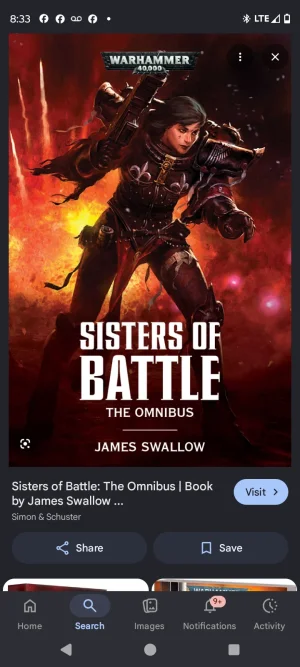
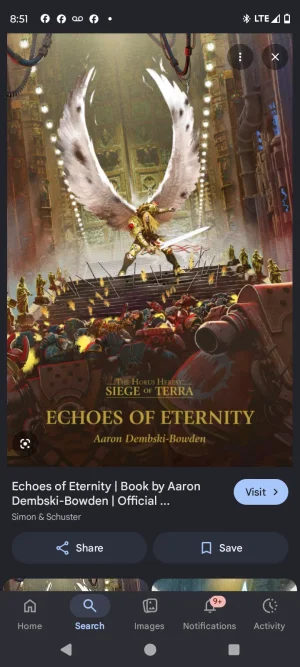


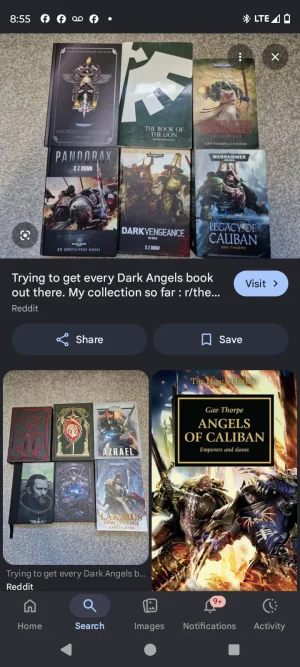

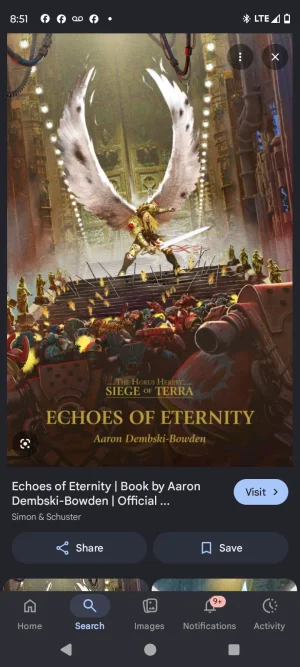
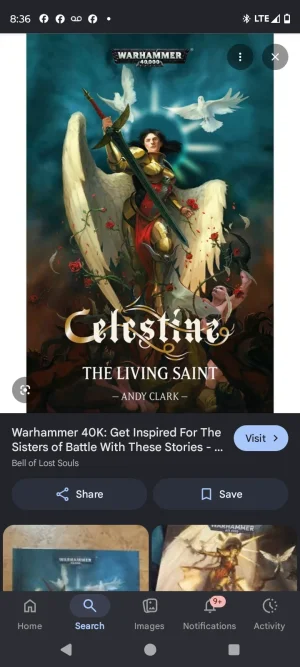
Not sure how I got a couple doubles in there. Oh well. Here's some I would have put instead.I'm a big Warhammer fan. Sadly most physical books have short runs and I prefer physical books. Most of these can probably find in audio form but I prefer physical books personally so it's a bit tricky but there are definitely some I would love to get actual copies of.
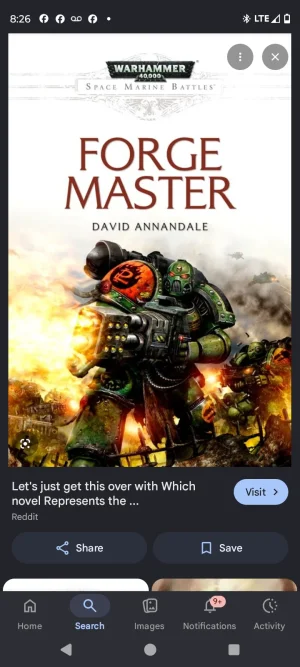
Blood Angels books since I don't have any books for them yet. Books on the Devestation of Baal especially since that is a pivotal moment as well as other heroes like Dante and Mepbiston.
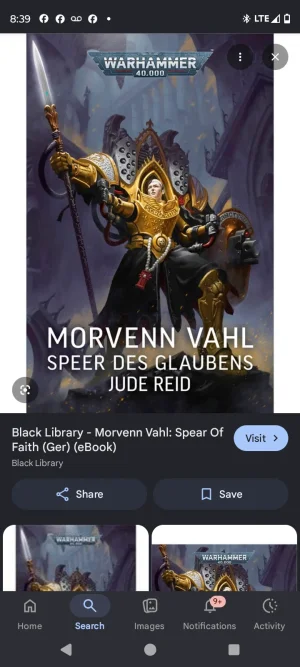
Sisters of Battle are another favorite faction I still need some books for so that is something I'd like especially for the named characters like Saint Celestine and Morvenn Vahl.
I would love to read the Horus Heresy but there is like 50 something books plus the Siege of Terra and some stand alone books so I'd probably have to settle for reading mostly audiobooks and finding favorite books and characters for a personal collection or get really lucky and find someone selling a whole collection some day. Some I know I'd love to get is anything regarding Blood Angels and Sanguinious and Raldoran especially, Vulkan and his Salamanders, and The Lion and his Dark Angels stuff.
Speaking of I'd love to get some physicals of Dark Angel books. I have 2 being Son of the Forest about The Lion's returnbto the 40k setting, and the Lazarus related book Enmity's Edge, which I'm currently reading. More is always good though. Would especially love books on Azrael possibly the Arks of Omen which are kinda books. (More like small short story excerpts I think.)
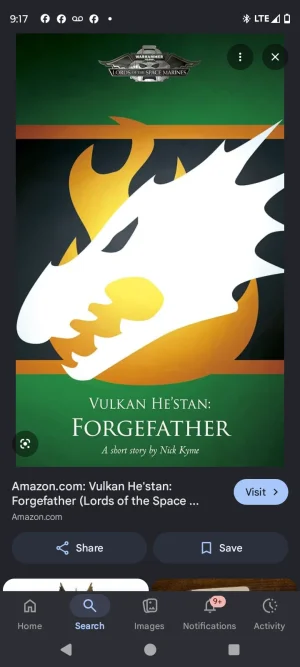
I have one Salamander book but what love more, especially one on Vulkan Hes'tan
I have a few Ultramarine books but wouldn't mind more tho I know they were basically Mary Sues for a while with a specific writer so, I might avoid those.
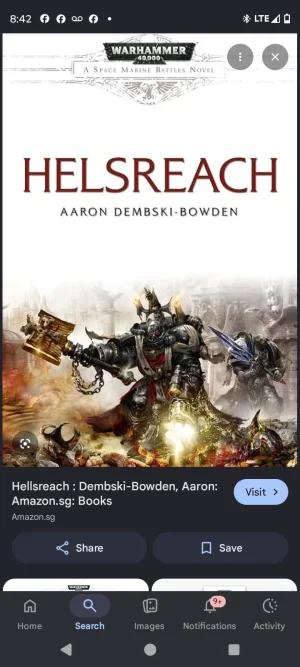
Aside from that some misc. books are some Black Templar stuff (especially Helsreach and Armageddon related stuff), Space Shark stuff, Lamenters, Iron Snakes, anything about the Ghoul Stars.

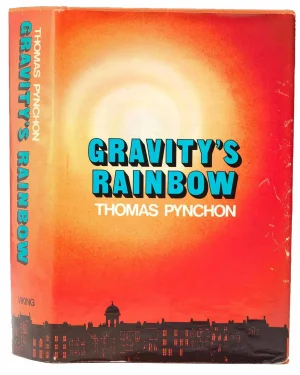
This restless contrafluvial parsing, this excavation of each layer in the substrata of the present, leads to a work that, were it written today, would be assigned the label “theory fiction.” Pynchon’s scanning and assimilation of a host of cultural histories and scientific archives, of the work of Pavlov, Max Weber, Robert Graves and others, is assiduous, even scholarly — if we imagine the most brilliant scholar dosed up to his eyeballs as he expounds urban theory, economics, folk mythology and differential calculus, all at the same time. Double integration in aeronautical guidance, the poetry of Emily Dickinson, weather reports gleaned from 1944 editions of The London Times — it all gets wound through Pynchon’s typewriter, held in formation by a rhetorical patterning lifted principally from Melville (like those of “Moby-Dick,” the most striking sequences in “Gravity’s Rainbow” typically begin with a statement of plain fact, then unpack this into a lyrical succession of images, which in turn set up a large conceit, before the chapter, often switching to the apostrophic/interrogative, climaxes in a burst of monumental allegory).

I think so.A lot of stuff on my reading list - books I already own. Do they count?

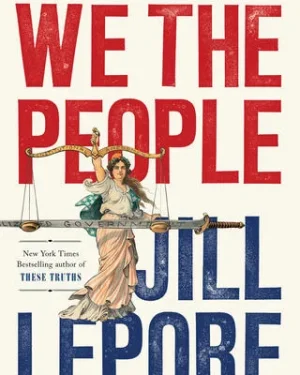
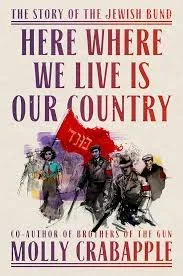
Both of those look like they’d be worth adding to the list. The Bund one especially caught my eye since it’s a part of history I only know in broad strokes. “We the People” looks like the kind of book you could spend a while working through too.Perhaps a thread on books we wish we would read
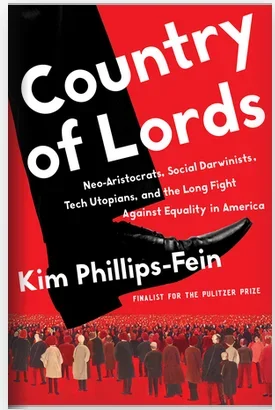
The story of American history is often told as a hard-won march toward the promise of equality, derived from Thomas Jefferson’s famous proclamation that “all men are created equal.”
But this inspiring story obscures a parallel tradition: an enduring and organized argument against equality itself. Again and again, influential Americans have asserted a fundamental inequality among human beings, arguing that the social, economic, and racial hierarchies in which some groups of people rule over others are not only natural but good.
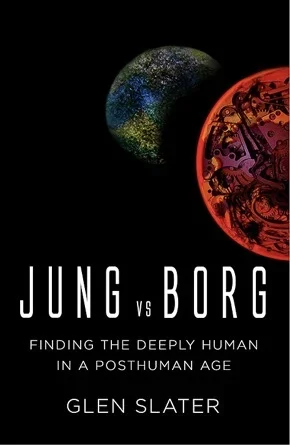
In Country of Lords acclaimed historian Kim Phillips-Fein traces this argument for inequality through six vivid archetypes. She discusses the natural aristocrats, such as John Adams, who feared the tumult of too much democracy; the social Darwinists, led by Yale professor William Graham Sumner, who blamed the poor for their own miseries; those who preached a gospel of production, including Henry Ford, who wanted an industrial hierarchy in which the “best” people ruled over compliant inferiors; utilitarian racists who advocated for eugenics and a racial hierarchy; meritocrats like Harvard psychologist Richard Hernstein who described an economic caste system based on “intelligence” in his co-authored book, The Bell Curve; and most recently, technocrats who seem to see themselves as superior because they are closest to the machines destined to outstrip and supplant fallible flesh-and-blood humanity.
The anti-egalitarian lineage Phillips-Fein traces is both clear and deeply unsettling. It challenges readers to think about the fragility of the ideal of equality and to reckon with the disturbing arguments of those who have campaigned against it over the past two and a half centuries. Country of Lords is essential reading for anyone trying to make sense of the widening gap between the nation we claim to be and the nation we are becoming.
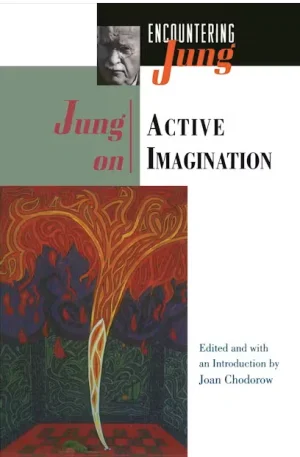
All the creative art psychotherapies (art, dance, music, drama, poetry) can trace their roots to C. G. Jung’s early work on active imagination. Joan Chodorow here offers a collection of Jung’s writings on active imagination, gathered together for the first time. Jung developed this concept between the years 1913 and 1916, following his break with Freud. During this time, he was disoriented and experienced intense inner turmoil —he suffered from lethargy and fears, and his moods threatened to overwhelm him. Jung searched for a method to heal himself from within, and finally decided to engage with the impulses and images of his unconscious. It was through the rediscovery of the symbolic play of his childhood that Jung was able to reconnect with his creative spirit. In a 1925 seminar and again in his memoirs, he tells the remarkable story of his experiments during this time that led to his self-healing. Jung learned to develop an ongoing relationship with his lively creative spirit through the power of imagination and fantasies. He termed this therapeutic method “active imagination.”
This method is based on the natural healing function of the imagination, and its many expressions. Chodorow clearly presents the texts, and sets them in the proper context. She also interweaves her discussion of Jung’s writings and ideas with contributions from Jungian authors and artists.